
Hope after the storm
My sister is two years into recovery. We got our family back. It took patience, aroha, and the right support at the right time. To anyone watching someone they love: do not give up.
Anonymous · Whānau voicerecovery

Community campaign · Ōtautahi Christchurch · Aotearoa New Zealand
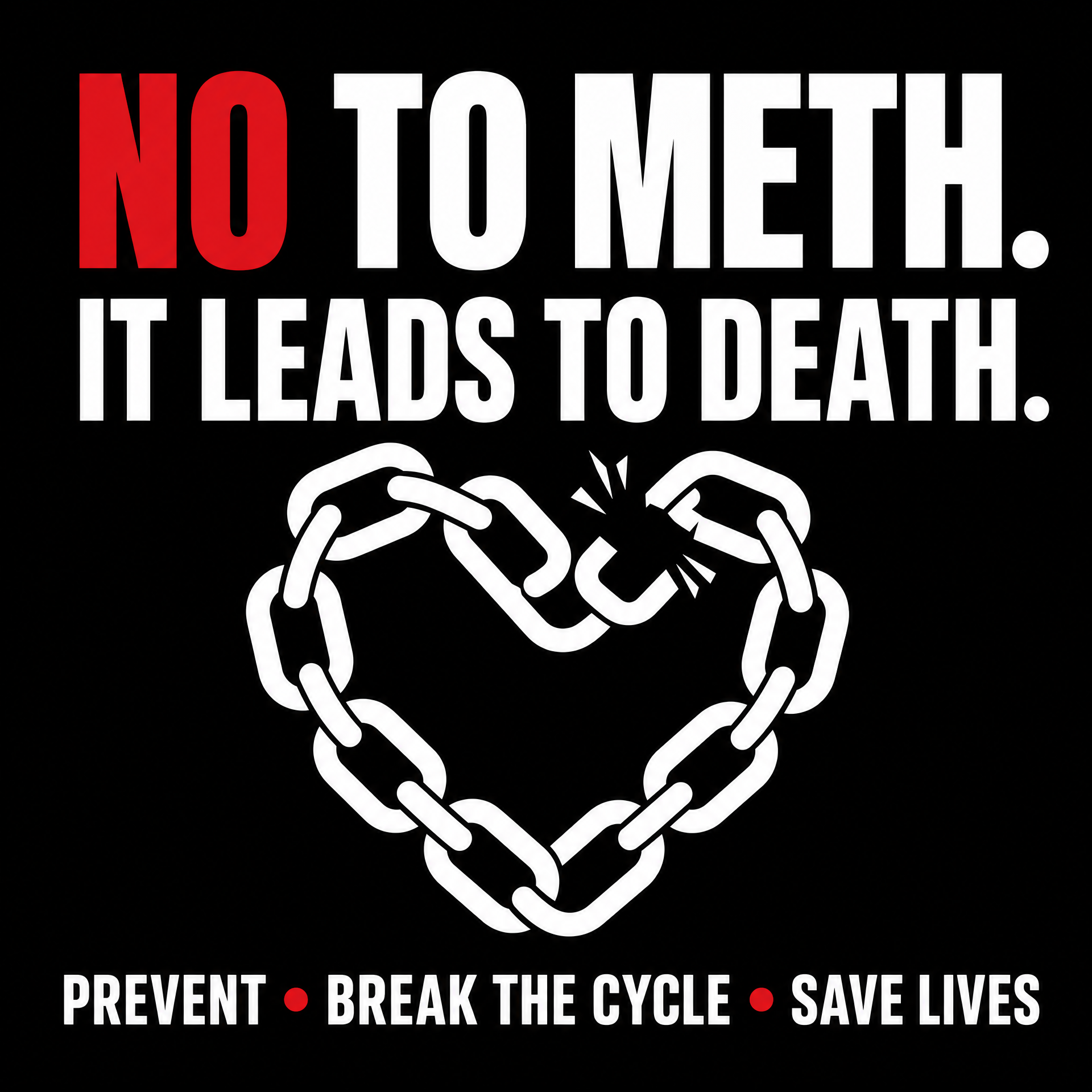
No to meth. It leads to death.Christchurch communities are strongest when no one faces meth harm alone. No shame. No judgement. Confidential support, when you're ready.
Why we exist
No To Meth. It Leads to Death. is a community-led prevention and awareness campaign working to reduce methamphetamine-related harm and deaths — by educating communities, supporting early intervention, strengthening whānau support, amplifying lived experience, and connecting people affected by methamphetamine with pathways to professional help and recovery.
An Aotearoa New Zealand where fewer people start using methamphetamine, fewer people experience serious harm, fewer families are devastated by addiction, and every person affected can access timely, culturally safe support and a pathway toward recovery.
We are against methamphetamine harm — not against people who use methamphetamine. That distinction shapes everything we say in public.
What guides us
People experiencing addiction deserve dignity.
Addiction affects families, not just individuals.
Act before a crisis occurs.
The earlier someone gets support, the better.
Have the conversations people sometimes avoid.
Recovery is possible.
People who have experienced addiction and recovery should help shape the response.
Be honest about the damage methamphetamine can cause.
Protect children, whānau, volunteers, participants and storytellers.
How we work — five pillars
Our role today is education, prevention, community connection, navigation and advocacy — not clinical treatment. We don't say "we treat addiction." We say "we connect people with appropriate professional support."
Stop people starting.
Give people accurate information about methamphetamine and its consequences.
Encourage people and whānau to seek support before crisis.
Connect affected people and whānau with existing professional and community services.
Show that addiction doesn't have to be the end of someone's story.
The facts, with sources
Grounded in published research — shared so whānau and communities can make informed choices, and so support can start early. Every claim below links to its sources at the end of this section.
Methamphetamine releases dopamine far beyond anything natural rewards produce — which is why it hooks so fast, and why ordinary pleasures can feel flat for a while afterwards. The hopeful part: brain imaging studies show the dopamine system can partly recover with sustained abstinence. The brain heals.
Studies find meth pushes dopamine to many times natural levels — the core of its grip
After use, dopamine drops below normal — driving low mood, exhaustion and craving
Imaging research shows measurable brain recovery after a year or more of abstinence
Dopamine · % of natural baseline (illustrative)
Illustrative, based on published research directions — not patient data. The dip below baseline helps explain craving; the recovery line is why we say hope is real.
The poem of the movement
On living life through a glass pipe — and what it does to communities, schools and towns.
Content note
This poem is a direct, first-person account of methamphetamine harm. It's deliberately confronting — and it may be distressing, especially if this is close to home for you or your whānau.
We share it because naming the harm honestly matters — and because it ends with a choice. If you'd rather not read it, the support section is right below, and recovery is possible.
Need to talk first? Free call or text 1737 · 0800 METH HELP 0800 787 797
Carried by the movement · for everyone the pipe has touched
Lived experience · guidance · understanding
People who have seen and lived the chaotic lifestyle — and now want more for themselves, their children, their whānau and their communities. We are so much more than being influenced by drug harm.
My sister is two years into recovery. We got our family back. It took patience, aroha, and the right support at the right time. To anyone watching someone they love: do not give up.
Our town is 4,000 people. When meth came through, it didn't knock — it moved into the pub, the rugby club, the freezing works. We lost three young men in eighteen months. Funerals where nobody said the word out loud. The…
I taught for twenty-two years. You learn to spot it — the kid whose eyes are older than they should be, who's raising siblings because the adults are chasing the pipe. Meth doesn't just break users. It breaks the invisib…
People think addiction belongs to the person using. It doesn't. It moved into our whole whare. My brother stole from Mum — not because he didn't love her, but because the meth needed feeding and love doesn't factor into …
I lost ten years to the pipe. Not all at once — it took them a pay-cheque, a friendship, a birthday at a time. I was a builder, good with my hands, reliable. Meth turned me into someone who lied before breakfast. The wor…
The evidence for hope
Addiction isolates. Recovery reconnects. A major New Zealand literature review — The Measurement of Social Connectedness and its Relationship to Wellbeing (Frieling, Krassoi Peach & Cording, Ministry of Social Development, 2018) — found social connectedness rests on three elements, each one a protective factor for wellbeing and resilience:
Sharing ordinary time — kai, laughter, mahi — with people who know you. Activities are simply more satisfying shared, and shared time builds the willingness to help each other.
Knowing someone would be there if you needed them — emotionally, practically, or with the right information. Just believing support is available reduces anxiety and depression.
Feeling connected to and valued by other people — part of something greater than yourself. Belonging is a protective factor; loneliness is a risk factor.
The same body of research found a lack of social connection predicts early death as strongly as major health-risk behaviours like smoking — and that in New Zealand data, connectedness predicted better mental health year-on-year more consistently than the reverse. This is why Break the Cycle builds community, whānau and belonging — not just information.

For whānau · early intervention
You don't need to wait for crisis. If someone you love is changing, these are the signs families across Aotearoa describe first.
Behavioural
Disappearing for days, sleeping at strange hours or not at all, sudden secrecy, new chaotic circles, abandoned commitments and hobbies.
Whānau impact
Kids walking on eggshells, partners covering or making excuses, celebrations derailed, a home that feels like it's holding its breath.
Financial
Money that never adds up, borrowing with urgent stories, unpaid bills despite income, possessions quietly sold.
Physical
Noticeable weight change, days of poor sleep, low mood after use, looking run-down for weeks at a time.
These changes don't always mean meth use — stress, grief and mental health can look the same. Lead with curiosity and care, not conclusions.
Pick a calm, sober moment — never mid-crisis. Lead with aroha, not accusation: 'I've noticed…, and I'm worried about you' lands where labels never will. Ask questions and listen. Expect denial; stay in the relationship, not the argument.

Not sure how to open the conversation? Choose who it's with — we'll suggest gentle first words you can make your own.
Worried about someone tonight? Free call or text 1737 · Alcohol & Drug Helpline 0800 787 797 (Māori 0800 787 798 · Pasifika 0800 787 799 · Youth 0800 787 984) · Emergency 111
Ask the evidence
Ask a question about methamphetamine and get an answer grounded in current published research — with the sources linked. Educational information, not medical advice.
The campaign commitment
"I will help prevent methamphetamine harm, support people seeking recovery, and help strengthen my community."
The wall · live
its apart of the journey and am grateful to be included
The petition asks
Break the Cycle — Christchurch pilot
A community prevention and early-intervention initiative combining community education, lived-experience participation, whānau information, youth prevention, community hui and connections to existing professional support services — aligned with the national 2026–2029 Action Plan to Prevent and Reduce Substance Harm. Requested: NZ$28,000.
Establish the campaign as a credible Christchurch community initiative
Deliver community education and awareness activities
Establish partnerships with relevant community and support organisations
Recruit lived-experience contributors and ambassadors
Provide accessible information for whānau
Connect people seeking help with appropriate existing services
Deliver community hui and prevention events
Measure campaign reach, participation and referral activity
Produce a Year One Impact Report
Develop a sustainable model for expansion
| Campaign development | $2,000 |
| Website / digital infrastructure | $2,000 |
| Design, printing & educational resources | $3,500 |
| Community hui and events | $4,000 |
| Lived-experience participation | $3,000 |
| Community facilitation / outreach | $5,000 |
| Youth prevention resources | $2,000 |
| Transport / outreach | $1,500 |
| Evaluation | $1,500 |
| Insurance, safeguarding & administration | $2,000 |
| Contingency | $1,500 |
| Total | $28,000 |
A planning budget, adjusted to each funder's requirements.
Founding team
Initially advisory, volunteer or part-time roles — not eight paid employees. Sound like you? Get in touch.
Overall leadership.
Recovery and lived-experience voice.
Family and community perspective.
Builds relationships.
Youth prevention.
Ensures information is safe and evidence-based.
Keeps the organisation funder-ready.
Social media, website and media.
The Christchurch launch
Not a protest. Not simply a speech. A community prevention and recovery event — with zones for education, whānau resources, recovery storytelling, professional services, youth, and a respectful Memory Wall.
Karakia / opening appropriate to the host.
Founder explains why this campaign exists.
Two or three carefully selected speakers who have experienced addiction and recovery.
Family members discuss the impact and the support families need.
Lived-experience representative, addiction professional, community worker, whānau representative, youth representative.
“What does Christchurch need to do differently?”
Recovery stories.
Officially launching “No To Meth — Save Lives and Break the Cycle.”
Everyone invited to sign the commitment.
Community partners programme
Sponsorship turns this campaign into sustainable Christchurch infrastructure — education, community hui, lived-experience speakers, youth prevention and safeguarding. Sponsors never control our messages, stories or safeguarding decisions.
$500
$2,500
$5,000
$10,000+
Every dollar goes to prevention, education, hui and whānau support in Ōtautahi.
Real donations, processed on the movement's own secure PayPal page.
Left a gift? Pop your email in and we'll send a proper thank-you.
Press & social
A new Christchurch community campaign is being established to raise awareness of methamphetamine-related harm and encourage prevention, early intervention, whānau support and recovery.
The campaign's flagship programme, Break the Cycle, focuses on community education, lived-experience participation, whānau information, youth prevention, community hui and pathways into existing support services. Organisers say the community should not have to wait until someone reaches crisis before action is taken.
"We want fewer people starting methamphetamine, fewer people dying, more people getting help earlier, and more whānau receiving support."
The campaign begins in Christchurch, with the intention of developing partnerships across Canterbury and, eventually, Aotearoa.
Ends
Latest from the movement
Fresh posts from the community land here — follow @movementbreakthecycle in the meantime.